The Others
written on March 14, 2026
It was only three months ago when I did my first post here titled “War”.
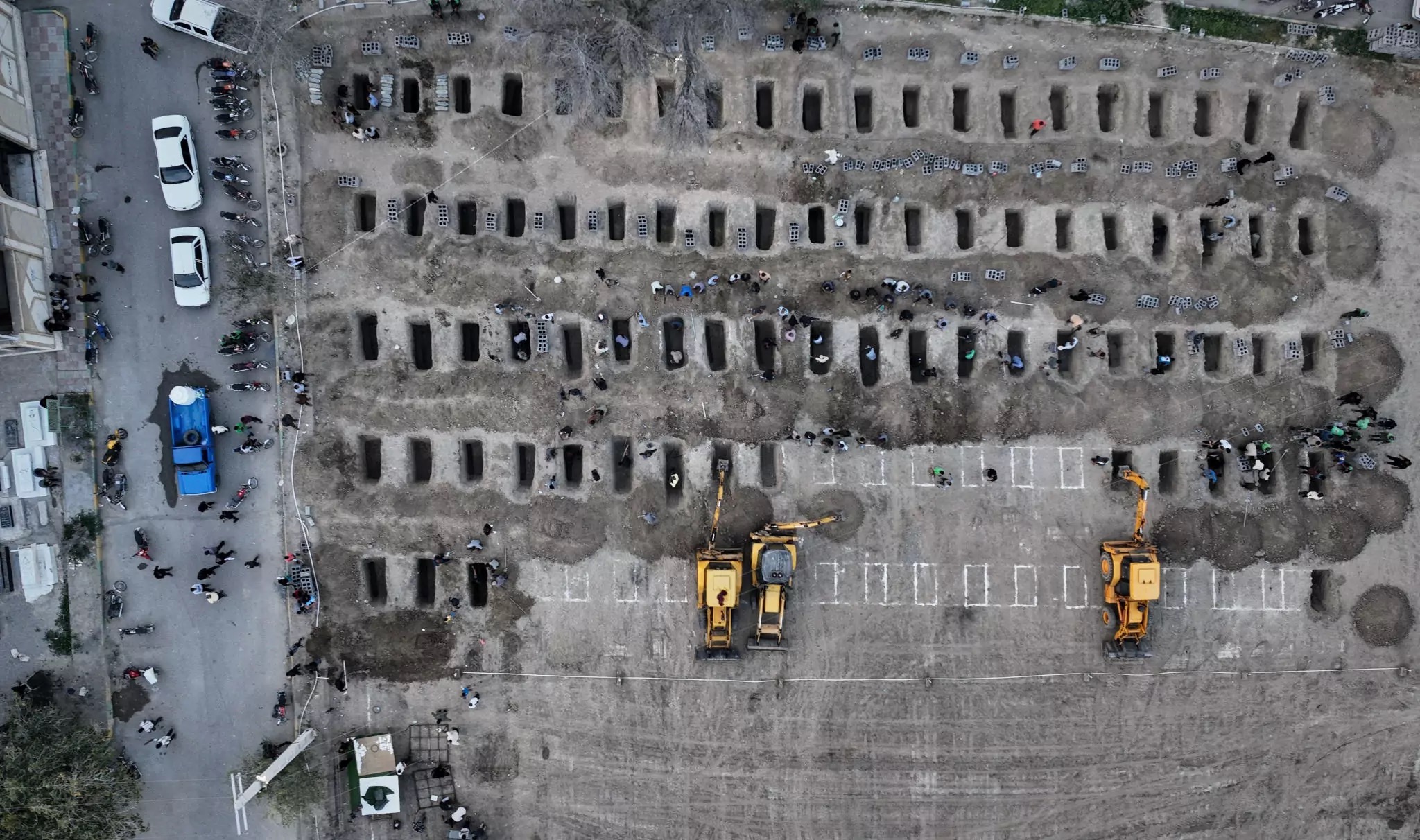
Things have only gotten worse. After the US and Israel started bombing Iran on the 28th of February, new red lines were crossed. There is no clear justification for that war, and no serious attempt has been made to provide one. What followed escalated within a week beyond those borders. The UAE, Kuwait, Bahrain were targeted by Iran in an attempt to draw them into the conflict. Israel immediately retaliated by also starting an invasion of Lebanon. We all read the news, we all know what happened.
Yet, if you take a step back, you won’t be able to tell the difference from the Russian invasion of Ukraine. There are two sides, they have grievances, and they can only be resolved by force.
What I want to talk about is not the war itself, but the tone.
The Tone
“I care about one thing and one thing only: that the 18, 19, 20, year old kid—who had no choice in where he went, or what threat he was facing—I want him to win and come home. That’s why we do it. Palantir is very helpful in delivering this.”
— Cameron Stanley, Chief Digital and Artificial Intelligence Officer of the Department of War
That is Cameron Stanley proudly demonstrating Palantir’s Maven Smart System. Clearly great technology. Makes war look like a computer game, or makes it look like Jira, depending on where you are coming from. Click a button here, life perishes over there. But that’s all okay, because they are the good guys.
Note the empathy in that quote. It’s entirely one-directional. The 18-year-old American kid matters. The 18-year-old on the other end of the drone strike does not. He’s not even part of the conversation.
And then there is the commander in chief:
“We may hit [Kharg Island] a few more times just for fun”
— Donald J. Trump, president of the United States
For fun. And to drive the point home, the White House Twitter feed shows a montage of drone strike footage from the war alongside Wii Sports footage with “Hole in one” and “Out of the Park”.
This is the tone. Not the grim resolve of a nation reluctantly at war. Not even the performative gravity of the Bush years.
The Distance
When the US invaded Afghanistan and Iraq it was easy to argue that those were “underdeveloped countries” that needed to be “liberated”. Dick Cheney captured it perfectly in 2003:
“I think things have gotten so bad inside Iraq, from the standpoint of the Iraqi people, my belief is we will, in fact, be greeted as liberators.”
The US knew what was best for them. The deaths along the way were not talked about, but they also did not need much talking about because the videos were blurry and the language was different.
What was so unsettling about the war in Ukraine when it started, was that it was a war of equals. Ukraine and Russia had shared history, they had a shared culture and they, despite what you might read in the news, very much shared a language. They shared it in the sense that a lot of Ukraine was russophone. Sometimes exclusively, sometimes in parallel with Ukrainian. A lot of the Ukrainian diaspora in Vienna that came in 2022 almost exclusively spoke Russian, because they came from the Russian-dominated east. There might be a small wealth difference between Russia and Ukraine, but for the most part they are very similar. Kids go to the same movies, they listen to the same music, they have similar dreams and aspirations. And you could see the war unfold on social media. Dead kid after dead kid came with family pictures. Killed in what looked like your average European country or house.
Iran and Lebanon feel very similar. The people there too have Instagram accounts and social media, even if the Iranian government tries its best to keep the internet turned off. People in Iran and Lebanon are highly educated, many speak English. Not that this matters, because the US has a lot of blood on its hands from the very beginning. They need to justify killing more than a hundred school children in two bombing strikes. And well, Israel seemingly does not have to justify anything. Even prior to the invasions of Lebanon and Iran, they already killed 20.000 children in Gaza.
Controlling The Message
There are different levels of dehumanization. The first and most obvious is that enemy soldiers do not deserve any empathy. If enemy combatants are killed, that is just what war is like. That obviously does not stop anyone from heralding their own soldiers as heroes, but the enemy soldiers are just targets. Then if factory workers or other supporting staff are killed, they are just collateral damage that are not talked about much. Why would you talk about them? They too have families, but they dared to work in a factory that supports a regime, so they should have known what’s coming for them. But really, we have reached the point where in the general discourse civilians are also just possible targets.
When dehumanization isn’t enough, you control the press. The FCC chair is already threatening to revoke broadcasters’ licenses over criticism of the war. The Secretary of Defense attacks journalists for asking uncomfortable questions. The message is clear: match the tone, or be silenced. You are not allowed to be disturbed.
Already Israel’s war in Gaza produced a lot of shocking pictures, but this supercharges the entire thing and it directly pulls the US, the supposedly shining city on the hill right into it.
Here
My kids are playing with toy soldiers. We live in Austria, a neutral country with no desire for war. They are talking about the attacks in Lebanon, because one of their favorite content creators is from there. A real person. Not a target, not collateral damage, not an other. Just someone they watch after school.
What is happening to us?