Disintegration
written on December 21, 2025
There won’t be any [special military] operations if you treat us with respect, if you respect our interests just as we’ve always tried to respect yours.
— Vladimir Putin, December 2025
I have been thinking a lot about forgiveness. The kind of forgiveness that we would need to de-escalate the Russian invasion of Ukraine. How do you move on without lying to yourself? How do you insist on accountability without turning it into a permanent vendetta? Can we build a modern world, governed by tit for tat but no lasting remembrance, pushing for retaliation of historic wrongdoings?
I believe we are at a point where these questions are not at all philosophical — not just in light of a war we already have, but in anticipation of darker things to come. Not because I believe people are eager for war, but because it increasingly feels like we are building a world in which war becomes the default. We got so used to the war in Ukraine that we no longer think of it as extraordinary. Regardless of the conflict, crippled young men and disfigured children have become so common in the news that we no longer respond to it.
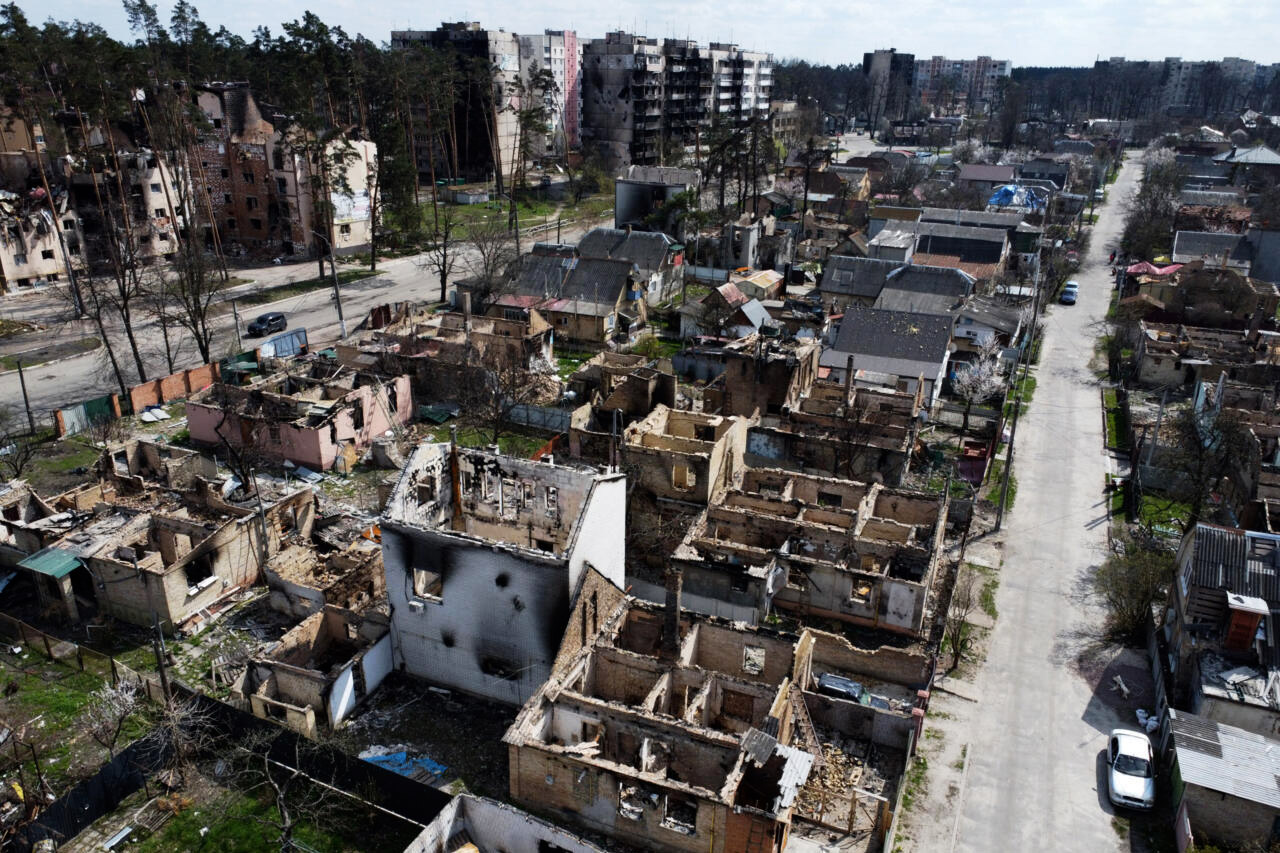
War is the ultimate failure, but what worries me is not necessarily the war, but what enables it. Those conditions come from a more general disintegration: a slow loss of trust in institutions, in shared facts, and in the basic premise that other people are acting in good faith. Once that trust is gone, de-escalation becomes hard and escalation becomes easy. Not because it is desired, but because it is the path of least resistance.
There is a mundane version of this that everyone recognizes. You go to an office and the process is worse than it used to be. The person behind the counter cannot help you, or will not, or is overwhelmed. You leave frustrated. You tell friends. You post about it. The conclusion is that “the state” is broken, corrupt, or hostile. Sometimes that conclusion is justified.
But the more common pattern is a vicious cycle. A lack of trust makes people disengage. The capable people stop showing up, stop applying for these jobs. To build a building, you need a permit. To get the permit, you need a bureaucrat to approve it. These rules and regulations come from good intentions but they require motivated people to balance them. Once they become a perversion of their original purpose, they repel good people which creates a vacuum. The vacuum is then filled by the unmotivated, by the opportunist, and by those who want to sabotage the process. The process becomes worse and trust falls further. The next iteration starts with worse people and less patience.
This dynamic is slow in normal times. The terrifying part is how quickly it accelerates when society is stressed. The same low trust that makes a permit office dysfunctional also makes countries reach for self-protection first.
The Corona crisis was probably the most noticeable stress test where we saw countries recognize their weaknesses. The scramble for medicine and PPE taught everyone the same lesson — when push comes to shove, countries prioritize themselves over others.
Once you believe that, the liberal world order starts to look like a fair-weather arrangement. Strong states hedge and defect first; weaker states learn to do the same but their abilities are limited. And rules built for long-term collective goods — like climate policy — are quickly seen as unilateral economic self-harm in a world where others no longer reciprocate.
But the erosion of trust is only half the story. What sets this version of disintegration apart is the role of social media, which did not exist in this form before. During prior wars, people who ran illegal radio stations were prosecuted and jailed. Today, anyone with a phone can broadcast to millions. This is powerful, and liberating, but social media acts as an accelerant for whoever controls the narrative that way. It turns every failure into a spectacle and every spectacle into a moral verdict.
A small, personal example: Vienna might not have everything figured out, but the tone about our city on social media is often hatred toward immigrants — amplified by people who do not even live here. Simply being noticeable in immigration statistics has made the city an easy target for imported outrage.
Social media also encourages performative outrage and quasi-philosophical discussions about betrayal and justification of almost anything. Rather than finding solutions to conflicts, people are spending time on arguing about who is at fault for how we got there. That blame is not always abstractly placed on organizations or governments, but also on individuals.
In an earlier time, if an official was incompetent, you might have ranted to your family and a few friends, and then you would have kept going. Maybe escalated it to a local court. Now the same incident can be pulled into a larger narrative within hours. Someone finds a name. Someone clips a video. Someone quotes a person out of context. Suddenly the story is not about a specific problem that can be fixed, but about a person who can be punished or an organization that needs to be destroyed.
Due process is increasingly being replaced by something darker. We have seen vigilante justice against people who were incorrectly labelled as the perpetrators of a shooting. Even the publishing of the Epstein documents feels more like a spectacle than an earnest attempt at justice. Anyone can be caught in the crosshairs of a mob that does not know them, cannot be reasoned with, and never has to pay for being wrong. Some countries that are pushing against this, like the UK, are branded as enemies of free speech. There are real tradeoffs here, but notice what gets lost: the argument stops being about facts and due process; it becomes about who you’re allowed to hate.
In an attention-seeking environment, sabotage trumps repair. There is little reward for making institutions work better; the reward is for making them look incompetent and illegitimate, and social media pays out instantly for that. Politicians like Vladimir Putin, Viktor Orbán, and Donald Trump have learned to exploit hypocrisy, point to it, and turn it into proof of bad faith. Mirroring them, European politicians find it easier to attack the Union than to suggest improvements. On a global scale, outsiders push into foreign politics not because they care, but because it is an easy place to manufacture chaos.
This is where the topic starts looking like a pre-war symptom. We have grown used to describing war as a thing that happens “over there.” But conflict has been bleeding into civilian life for years in ways that do not require declarations. There is the hybrid layer: cyber attacks, disinformation, sabotage, pressure on infrastructure, and the deliberate poisoning of political discourse. The point is not always to win a specific battle. Often the point is to make you doubt your own society. We don’t know who sabotaged Nord Stream, but it also no longer matters. We don’t know why drones are interrupting airports in Europe, why weather balloons are disrupting airspace, or why freighter planes explode. Maybe it’s not sabotage, but it’s the uncertainty that does all the damage.
A divided society is easier to intimidate and a cynical society is easier to manipulate.
An uncomfortable question, then, is what “after” looks like. Let’s take the war in Ukraine: even in the most optimistic case, if the war were to end tomorrow, can one forgive Russia? I do not mean forgiving in the sense of pretending it did not happen. I mean the practical question of how Europeans are supposed to live on the same continent with a state that did this, and may do it again. And what justice even means at scale.
Accountability is not optional. Without it any “peace” is just a pause. It’s hard for me to imagine how tensions in Europe can defuse, particularly given the current political landscape in the US which favors the aggressor. Is there even a path that does not involve extended hostility for half a century?
Forgiveness, if it ever comes, needs to be real and lasting. It would be a set of decisions about what kind of future we accept. Germany was reintegrated into Europe after 1945, but not by pretending that nothing happened. It required recognition of defeat, rebuilding, and a long, difficult process of confronting what had been done. I tend to think what has helped was a universal recognition that it lost, and to show it the consequences of its actions. A societal understanding of the victims it created, the atrocities it committed. There are memorials everywhere in Europe reminding us of that past. I take that as a prerequisite for moving on. I do not see a path that resembles that right now. Not for the war in Ukraine.
What frightens me is that we are degrading the very mechanisms that any “after” depends on. Courts are treated as enemies. Not only are the courts shown as enemies, some judges are personally persecuted. Some of the judges at the International Criminal Court (ICC) are personally sanctioned by the US. Due to fear of secondary sanctions, those judges have no credit cards, no bank accounts, no online services. There is no due process and society is accepting this as normal.
So many foundations are simultaneously under attack. Journalism is treated as propaganda, most types of media are being discredited. Elections are treated as fraud by default. Expertise is treated as self-serving. The basic idea that a process can be legitimate even when it disappoints you is disappearing.
It pains me to see that even the United States is degrading. Whatever idea we had of the US as “a shining city upon a hill”, that idea is gone. It is massively engaged in dividing society and creating chaos. The new mass deportations do not just remove people; they overwhelm courts and administrative systems. They create backlogs, errors, cruelty, and every day more distrust, more chaos, more fear. That fear makes people avoid institutions entirely, which makes integration harder and crime easier. Then the resulting problems are used as justification for harsher measures. It is another vicious cycle: produce dysfunction, point at dysfunction, claim the only solution is power without restraint.
The same logic is increasingly applied outward. The US is attacking its former allies, levying heavy tariffs, undermining international institutions, and withdrawing from treaties. It’s running Russia’s playbook better than Russia itself. Divisions between genders, between races, religions, political beliefs, income brackets are all being amplified and encouraged at home and abroad.
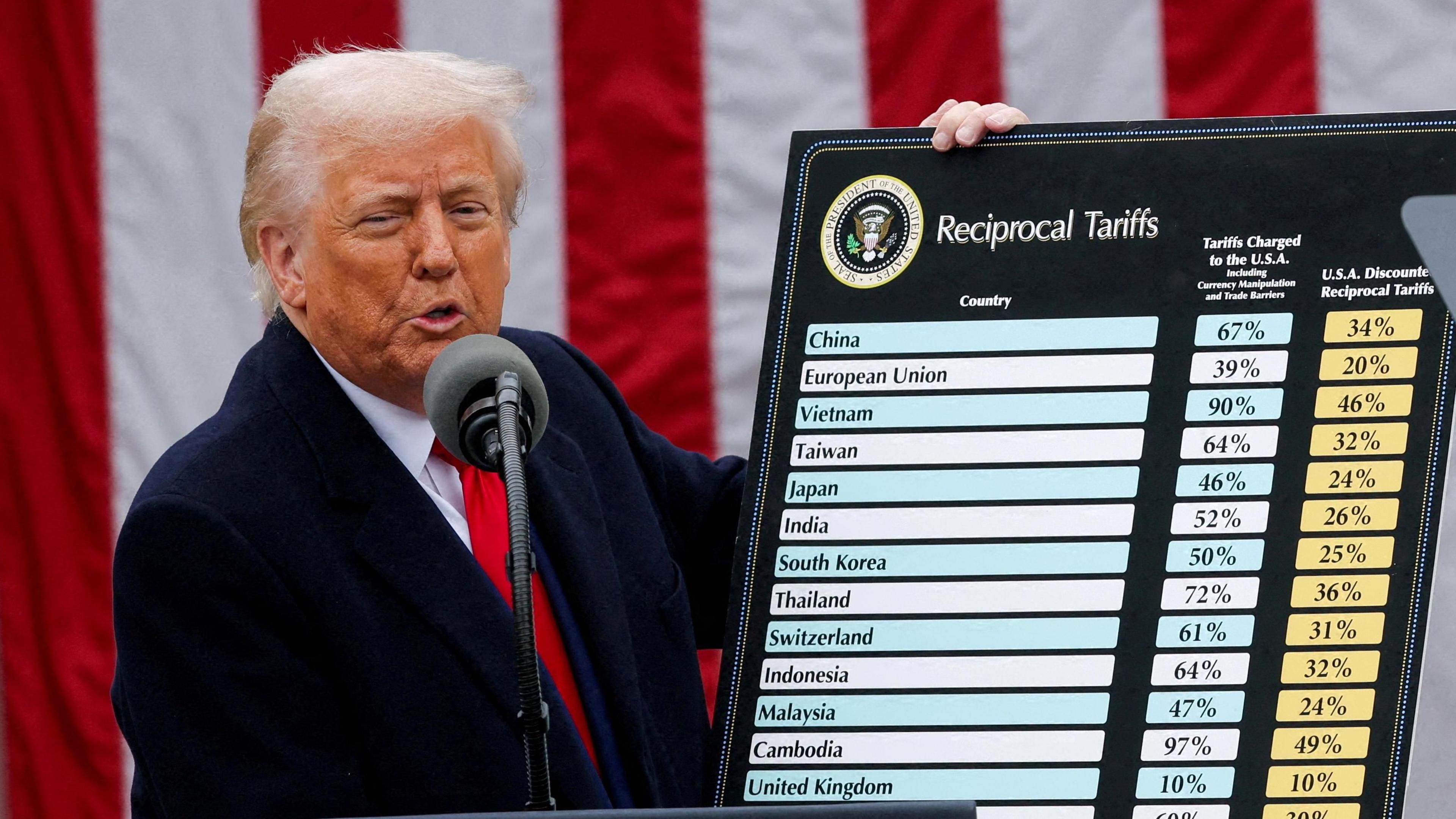
It is tempting to see this as someone else’s collapse, something to watch with horror and from a distance. But the pattern is general. Once the logic takes hold that decency is weakness and that law is merely a tool for your side, it spreads across borders faster than any army. One of Vienna’s largest rallies was “Black Lives Matter” — not because black lives should not matter here, but because the movement was prominent in the US, it was easy to adopt, even while ignoring local forms of racism that had little to do with American police brutality. That was organic spread. What we see now is something more deliberate: the US government is beginning to export its domestic culture war, requiring adherence to “anti-woke” policies as a condition for doing business. The export of division has become official policy.
I am trying to pay attention to the ways in which I contribute to this, but it feels like being a tiny cog in a huge machine. Every day you risk being recruited into someone else’s outrage. I want to do the boring work that keeps societies from sleepwalking into escalation: insisting on processes, supporting institutions even when they are imperfect, resisting the urge to turn every conflict into a moral apocalypse. Maybe if we collectively put energy into strengthening trust and reforming our institutions, we can avoid disintegration — and with strong institutions that have trust across borders, find a way to restart international cooperation.
This is where the question of forgiveness becomes concrete. Germany’s reintegration after 1945 was not merely an act of collective will — it required the very institutions we are now dismantling or rejecting. Courts that could deliver verdicts recognized as legitimate. Media that could document what happened. Schools that could teach it. Above all, it required trust: trust that processes would be fair, that facts would be recorded, that justice would be imperfect but real. Without those institutions, forgiveness at the scale of nations becomes structurally impossible. For tensions to de-escalate, we need to believe that there is a path forward that does not involve endless revenge.
If we are at risk of an even larger war, I do not think it will be because humanity collectively decided to return to barbarism. It will be because too many of us accepted disintegration as normal, and too many institutions became too brittle to absorb shocks without breaking. Because we treated the world as a zero-sum game where the optimal strategy was narrow self-interest over the common good.
Because with this thinking, at one point, the unthinkable will be described as inevitable.